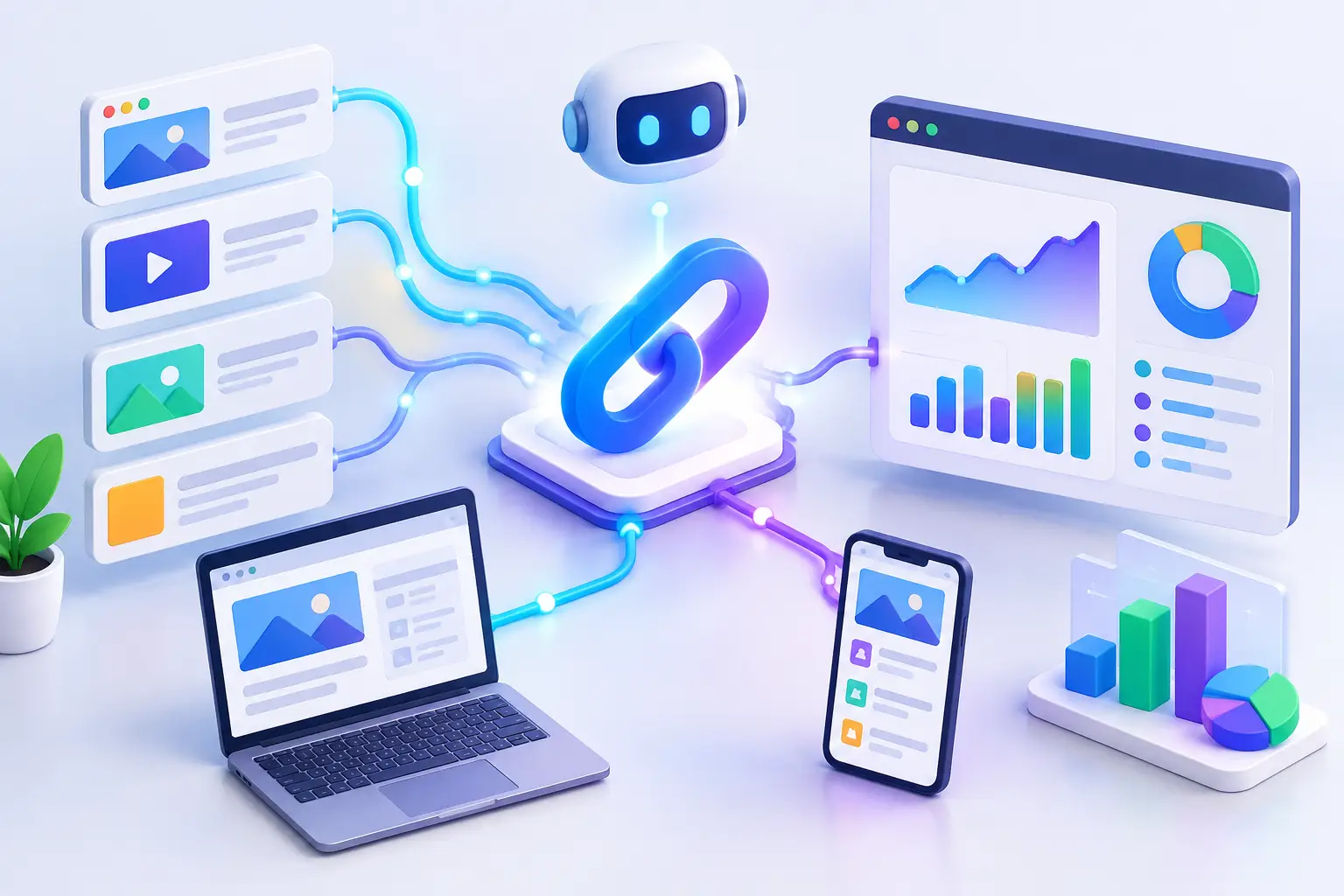
A buyer asks an AI assistant for the best project management tool, gets a recommendation, and clicks your site. Your dashboard may show a referral, direct visit, or nothing useful at all. That gap is the real challenge behind the AI attribution future: traffic is still arriving, but the path that produced it is becoming harder to see.
For marketers, creators, developers, and startup teams, this is not a theoretical analytics problem. It affects where you spend, which content you repeat, how you measure partnerships, and whether you can prove that a campaign created demand before a customer ever reached a landing page. The teams that win will not wait for a perfect attribution model. They will build cleaner link infrastructure, capture stronger signals, and make decisions with the evidence they can verify.
Why AI changes attribution before the click
Traditional web attribution was built around a relatively visible journey. Someone searched, clicked an ad or an organic result, moved through a website, and converted. Even that model was imperfect, especially across devices and privacy settings, but referrers, campaign parameters, cookies, and conversion events created a workable trail.
AI-assisted discovery breaks that trail in several ways. A person may research inside a chatbot, receive a condensed answer based on several sources, then type your brand name into a browser later. They may open a cited result in an in-app web view that strips referral data. An agent may compare products, summarize options, or complete a task on a user's behalf. The interaction can influence a decision without sending a clean, attributable click.
That does not mean attribution is dead. It means last-click reporting is less qualified to act as the sole judge of performance. A channel that appears to create little direct traffic may still be increasing branded search, returning visitors, assisted conversions, or demand among a specific audience.
The practical shift is from asking, “Which source gets full credit?” to asking, “What signals show that this activity moved the customer closer to an outcome?” That is a more honest question and, over time, a more useful one.
The AI attribution future needs a stronger link layer
AI models can summarize pages, but they cannot repair a messy campaign taxonomy or explain a generic short link shared everywhere. Your link layer is where attribution either starts with context or starts with guesswork.
Every campaign link should carry a clear purpose. A link shared in a creator newsletter should not be the same link used in a paid social post, a sales sequence, a QR code, and a community thread. Separate links let you compare distribution choices without rebuilding reports after the fact. Branded domains also improve recognition when users encounter links outside the controlled environment of your website.
This is particularly valuable for AI-related traffic. When a recommendation, agent workflow, or AI-generated response points users toward your content, the traffic may be fragmented across browsers, devices, and referral categories. A dedicated, recognizable link used in the source you control gives your team a better chance of identifying what happened next.
Use naming conventions that people can understand six months later. Include the channel, campaign, audience, and asset where appropriate. Keep names short enough to be practical, but specific enough to answer a real question. “spring-demo-video” is useful. “campaign-final-new-2” is not.
Track source intent, not just source labels
A label such as “AI” is too broad to guide spending. AI discovery can include assistant citations, agent-driven actions, AI browser features, embedded chat experiences, and content repurposed by users. Those paths have different levels of intent and different tracking limits.
Instead, distinguish the intent behind a link. Is it a link designed for an AI-readable knowledge base? A link included in a human-facing answer? A tracked destination for an agent workflow? A resource that users copy into prompts? This approach gives you a reporting structure that can evolve as behavior changes.
For example, a product team might create separate tracked links for documentation shared through support, a public comparison page, and a task-oriented API endpoint. The goal is not to pretend every touchpoint is perfectly observable. The goal is to avoid mixing fundamentally different journeys into one unhelpful bucket.
What to measure when referral data gets weaker
When direct referrers disappear, teams often overcorrect and chase vague “brand awareness.” That is not necessary. You can still build a disciplined measurement system by combining link-level evidence with outcome-level evidence.
Start with clicks, unique visitors, geography, device type, time patterns, destination engagement, and conversions where available. Then compare those signals with changes in branded search, direct traffic, returning users, demo requests, signups, or purchases during the same period. No single metric tells the entire story, but patterns across several metrics can show whether a campaign is producing qualified interest.
Incrementality matters here. If you increase distribution of a specific resource and see a meaningful lift in the outcomes it was designed to influence, that is stronger evidence than assigning 100 percent credit to the last recorded click. Small tests are often enough. Change one distribution variable, use dedicated links, define a time window, and compare performance against a reasonable baseline.
For high-volume teams, cohort reporting is especially useful. Group visitors by when and where they first encountered a campaign link, then observe what they do over time. A source that converts slowly may be a poor fit for a weekly last-click report but an excellent source of customers over 30 or 60 days.
Trust will become part of attribution quality
There is another issue that attribution discussions often miss: a click only has value if people are willing to take it. AI-generated answers, copied links, QR codes, and automated workflows can make destination trust harder to judge. A branded link that clearly signals ownership is more than a cosmetic detail. It can affect whether a person clicks, shares, or abandons the journey.
That makes safety signals part of measurement quality. If a destination is malicious, broken, redirected unexpectedly, or perceived as suspicious, your campaign data becomes distorted before a visitor reaches the page. Teams need to know what they are distributing and reduce risk at the moment links are created, not after a campaign has spread.
AWSYS approaches this with link-level trust scoring, destination safety checks, and AgentLink analytics that help teams separate emerging AI-agent activity from ordinary traffic. The benefit is straightforward: clearer data is easier to act on, and safer distribution protects the value of every click you pay for or earn.
Avoid the two biggest attribution mistakes
The first mistake is treating AI traffic as a separate channel that can always be isolated. Sometimes it can. Often, it cannot. A user may move from an AI answer to a search engine, a bookmarked page, a shared message, and finally your site. Forcing that path into one source label creates false confidence.
The second mistake is giving up on structure because tracking is imperfect. Privacy changes and AI interfaces make certainty harder, but they also make good campaign hygiene more valuable. Clear link ownership, consistent tags, controlled redirects, and defined conversion events give you a reliable base when other signals are incomplete.
The right standard is not perfect surveillance. It is decision-grade measurement. Can your team tell which content earns attention, which distribution methods create qualified visits, where trust is breaking down, and what deserves another test? If the answer is yes, your attribution system is doing its job.
Build for evidence, not attribution theater
The AI attribution future belongs to teams that stop treating a dashboard as a verdict. Attribution is an operating system for better decisions, and it works best when links, analytics, content, and product workflows use the same language.
Create distinct links before distribution begins. Define the outcome each link is meant to influence. Review assisted and delayed behavior alongside direct conversions. Keep a record of what changed between tests. Most importantly, do not hide uncertainty behind a neat-looking chart. Say what the data proves, what it suggests, and what you need to test next.
That discipline costs far less than continuing to fund channels you cannot explain. Start shortening safely, track every meaningful path, and give your team evidence that can keep up with how people and agents now discover products. #AWSYSCO