A link gets 5,000 clicks and still tells you almost nothing if the data stops at total volume. That is exactly where geo device referrer tracking matters. It shows where visitors are located, what hardware they used, and which source sent them, so you can stop guessing and start adjusting campaigns based on real behavior.
For marketers, creators, and product teams, this is the difference between vanity metrics and decision-ready analytics. A spike in clicks looks good in a report. Knowing that most of those clicks came from mobile users in California through Instagram, while desktop traffic from email converted better in Texas, is what actually changes budget, creative, and routing.
What geo device referrer tracking actually measures
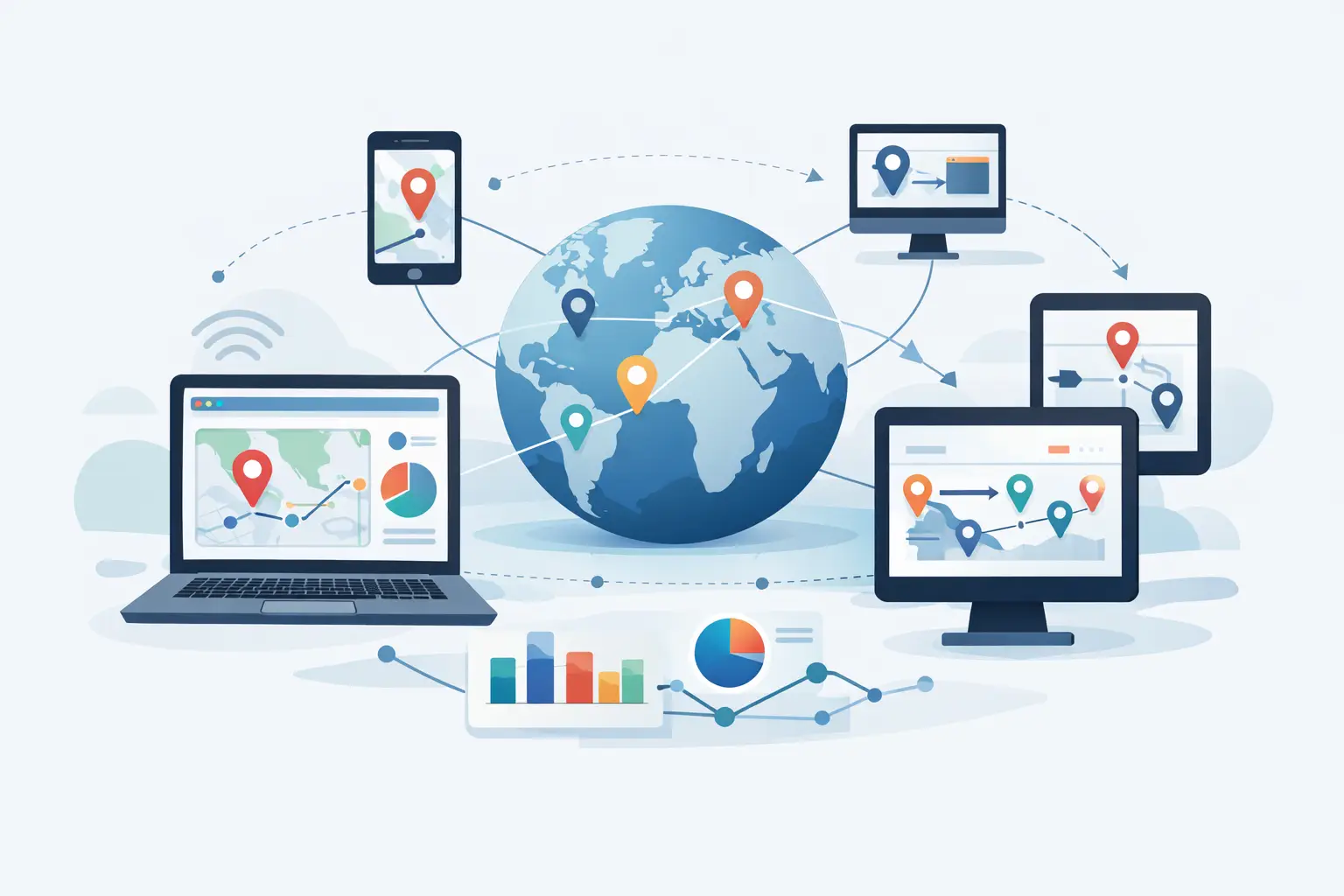
Geo device referrer tracking combines three layers of click intelligence into one view. Geo data identifies the visitor's approximate location, usually by country, region, city, or broader network-based geography. Device data shows the operating system, browser, and device type such as mobile, tablet, or desktop. Referrer data tells you where the click came from, whether that was a social platform, search engine, email app, direct visit, or another website.
On their own, each signal is useful. Together, they are far more valuable because traffic quality rarely depends on one factor alone. A campaign might perform well on mobile but only from certain geographies. Another might get strong referral traffic from a partner site, but those users may bounce if the destination is slow on Android devices. The combined view exposes patterns a top-line dashboard hides.
This is also why basic short-link analytics often fall short. Total clicks, even with a timestamp, do not explain context. Advanced tracking turns a short link into a measurement layer that can guide distribution, testing, and user experience decisions.
Why geo device referrer tracking improves campaign decisions
The main advantage is precision. Instead of asking, "Did this link work?" you can ask better questions. Which channels are sending high-intent traffic? Which countries are responding to this offer? Are mobile users getting a worse experience than desktop users? Are certain referral sources driving bot-heavy or low-quality clicks?
That level of detail leads to better action. If a paid social campaign gets heavy iPhone traffic from major metro areas, your landing page and creative should reflect that audience. If referral traffic from a newsletter drives more engaged desktop sessions than social traffic, it may deserve more attention even if raw volume is lower.
There is also a cost-control angle. Growth teams do not need more dashboards. They need fewer blind spots. Geo device referrer tracking cuts waste by helping you spot underperforming traffic segments early, before they consume more spend or distort reporting.
Geo data is useful, but not perfect
Location data is powerful, but it is not magic. Most link platforms infer geography from IP data, which is generally accurate at the country level and less reliable as you move down to region or city. VPNs, mobile carrier routing, privacy tools, and corporate networks can all blur the picture.
That does not make geo tracking unreliable. It means you should use it as directional intelligence, not as courtroom evidence. Country and state-level insights are often strong enough for campaign timing, localization, traffic routing, and market prioritization. Hyperlocal decisions need more caution.
This trade-off matters because overconfidence creates bad optimization. If one city looks weak, the real issue may be routing or attribution noise rather than demand. Good teams use geo data to test smarter, not to assume too much.
Device tracking tells you more than mobile vs desktop
A lot of teams stop at device category, but the real value is in the combinations. Device tracking can reveal browser friction, operating system trends, and uneven user experience across environments. If your link gets strong mobile engagement but poor downstream performance, the problem may be page speed, app handoff, form usability, or tracking conflicts on certain browsers.
This is especially important now because traffic journeys are fragmented. A user may discover a link on mobile, revisit on desktop, and convert later through a direct session. That means device data is most useful when you treat it as part of a broader path, not as a single-point explanation.
Short-link analytics help here because they capture the click before the landing page experience starts. That gives you an upstream signal even when your site analytics are incomplete, blocked, or split across tools.
Referrer data explains intent better than click volume
Referrer tracking is often the fastest way to separate casual traffic from meaningful traffic. Two sources can send the same number of clicks and produce very different outcomes. One may be driven by curiosity and fast drop-off. The other may come from a trusted mention, a niche community, or a well-timed email and produce better engagement.
The catch is that referrer data is not always clean. Some apps strip referral information. Privacy settings, redirects, HTTPS rules, and in-app browsers can turn a click into "direct" traffic even when it was not truly direct. That is normal. The goal is not perfect attribution. The goal is enough visibility to compare channels intelligently.
When referrer tracking is paired with geo and device signals, missing referral data becomes less damaging. Even if some traffic appears direct, you can still see where it came from geographically and what environment it used, which helps rebuild the story.
Where combined tracking becomes most valuable
Geo device referrer tracking is especially effective in campaigns where audience context changes performance. Paid acquisition is the obvious example, but it is just as useful for organic social, affiliate distribution, creator links, QR campaigns, product onboarding, and multi-region launches.
A creator can see that traffic from TikTok is heavily mobile and concentrated in a few countries, then send those users to a lighter mobile-first page. A SaaS team can compare referral quality from community posts, email sequences, and outbound sales content. An ecommerce brand can route clicks by geography and still measure which devices and sources produce the best buying behavior.
This is also where advanced link management platforms earn their keep. They do more than shorten URLs. They organize campaign links, preserve branded presentation, apply traffic rules, and surface analytics in a way that makes the data usable. AWSYS, for example, pairs click analytics with safety controls and source-level visibility so teams can shorten, track, and distribute links without treating security and measurement as separate jobs.
Common mistakes that make tracking less useful
The biggest mistake is collecting segmented data and never acting on it. Teams often celebrate that they can see geography, devices, and referrers, but keep sending everyone to the same destination with the same experience. If the tracking does not change routing, creative, timing, or budget allocation, it becomes expensive decoration.
The second mistake is reading one dimension in isolation. A country may look weak overall but perform well on desktop from email. A social source may look strong overall but fail on Android. Useful analysis comes from intersections, not from single filters.
Another issue is poor link hygiene. If naming conventions are inconsistent, campaigns are mixed together, or branded links are not organized, even strong analytics become harder to trust. Structure matters. Clean links create clean reporting.
Finally, there is the fraud and trust problem. Not every click is worth counting equally. Suspicious traffic, malicious destinations, and low-quality sources can pollute your view. Tracking works best when it sits inside a system that also checks link trust and blocks risky behavior before it spreads.
How to use the data without overcomplicating it
Start with a narrow question tied to a real outcome. Which source sends the best traffic for this launch? Which geo segments respond to this offer? Are mobile users underperforming because of the page experience? Then look at geo, device, and referrer signals together rather than in separate reports.
From there, make one practical change. Route by location. Adjust mobile landing pages. Shift posting time by region. Prioritize the referral sources that produce stronger engagement. Remove sources that generate weak or suspicious traffic. The value comes from iteration, not from staring at prettier charts.
If your stack already includes web analytics, geo device referrer tracking should complement it, not replace it. Site analytics can tell you what happened after the click. Link analytics tell you what happened before it. You need both if you want a cleaner picture of campaign performance.
A short link should not be a dead end for measurement. It should be the first checkpoint. When you know where a click came from, what device it used, and which source triggered it, you are in a much better position to improve the next click instead of just counting the last one.
The smartest teams are not chasing more traffic at any cost. They are building sharper visibility into the traffic they already earn, because better context usually beats bigger volume.