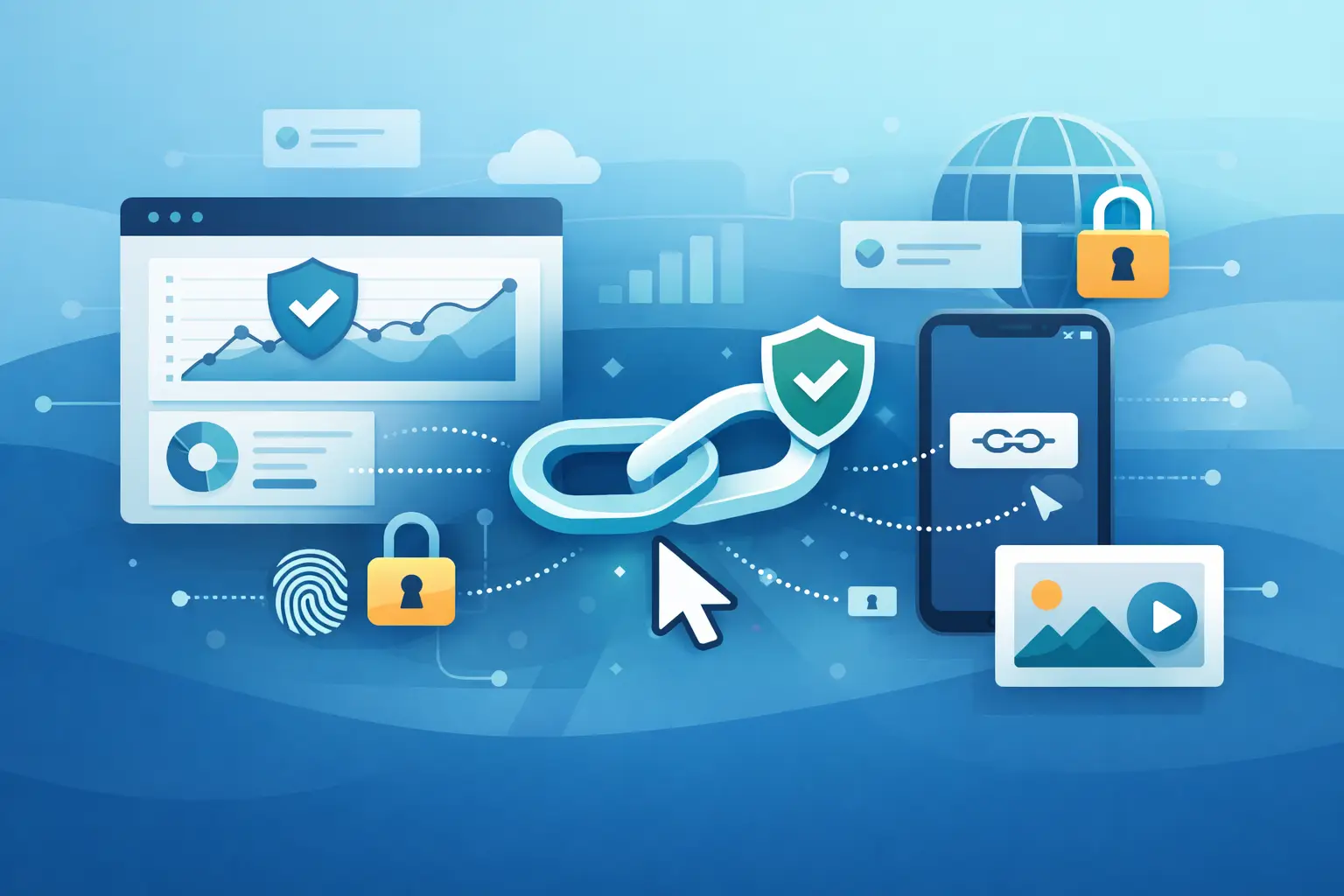
A short link can win a click or lose it in half a second. Someone sees a compact URL in a social post, text message, ad, QR code, or product update and has one question: what makes short links trustworthy enough to open?
The answer is not simply that the link works. Trust comes from the signals around the link: who appears to own it, where it leads, whether the destination is safe, and whether the sender has earned confidence before. For marketers, creators, developers, and growth teams, those signals directly affect click-through rates, campaign performance, and brand reputation.
Why short links start with a trust disadvantage
A full URL gives people clues. They may recognize the domain, read part of the page path, or spot a suspicious misspelling before they click. A short link removes most of that context by design. It is easier to share, easier to scan, and cleaner in a campaign - but it also hides the destination.
That trade-off means a generic short domain can create hesitation, especially in high-risk channels. Email recipients are trained to question unfamiliar links. Social users have seen phishing attempts. QR-code scanners cannot inspect a destination at a glance. A link that looks anonymous may be completely legitimate, but people have no reason to assume that.
Trustworthy link management restores context without sacrificing brevity. The goal is not to make every link look complicated. It is to make the link feel intentional, recognizable, and safe before a person or system follows it.
What makes short links trustworthy in practice
A recognizable branded domain
A custom domain is one of the strongest visible trust signals available. Compare a link such as `yourbrand.co/summer` with an unfamiliar, generic short URL. The first tells the recipient who is responsible for the click. The second asks them to take a chance.
Branded links also build repetition. When customers repeatedly see the same domain in newsletters, creator posts, support messages, and ads, they learn to recognize it. That familiarity lowers friction over time and protects campaign consistency across channels.
A branded domain is not a magic shield. If the rest of the message looks suspicious, a custom short link will not fix it. But paired with clear copy and a relevant destination, it turns an opaque redirect into a recognizable brand touchpoint.
A destination that matches the promise
The text surrounding a link matters as much as the link itself. If a post says “Download the product brief,” the click should lead to that brief or a page that clearly provides it. Sending users through a vague landing page, a surprise sign-up wall, or an unrelated offer damages trust quickly.
This is especially important when teams reuse links. A permanent short URL is convenient, but changing its destination without a clear reason can confuse returning visitors. If you must update a destination, preserve the original intent whenever possible. A campaign link named `/webinar` should not later redirect to a general homepage because the event ended.
For dynamic routing, relevance is the standard. Routing mobile users to an app page and desktop users to a product page can be useful when both destinations support the same next step. Routing users differently in a way that obscures the offer creates unnecessary doubt.
Safety checks before distribution
Trust cannot depend on visual branding alone. A trustworthy short link platform should scan destinations and block malicious URLs before they are shared. That reduces the chance that a typo, compromised page, copied campaign asset, or bad actor turns your short domain into a delivery channel for harmful content.
For a business, this is operational protection as well as audience protection. A malicious redirect can trigger complaints, weaken sender reputation, and create a support burden long after the original link has been removed.
Transparent trust scoring at link creation is valuable because it puts the signal where action happens. Instead of discovering a risk after a campaign goes live, the team gets a reason to review the destination before publishing. A score should support judgment, not replace it. A legitimate new domain may need a closer look, while an established domain can still host a risky page after a compromise.
Clear ownership and controlled access
Links often outlive the person who created them. A creator leaves a team, a campaign manager changes roles, or a developer ships a redirect inside an application workflow. If the account has no clear ownership structure, those links become hard to audit, update, or retire.
Trustworthy link programs treat URLs as managed assets. Teams should know who can create links, edit destinations, view analytics, and connect domains. They should also be able to organize links by campaign, product, channel, or client so that old redirects do not turn into a mystery six months later.
For developers, API access and webhooks add another layer of control. Links can be created from approved workflows, tagged automatically, and monitored as part of a broader product or marketing system. Automation helps at scale, but it needs guardrails. An API that can generate thousands of links without domain controls or destination review can create risk faster than any manual process.
Consistent behavior across devices
A link should behave predictably on the device where it is opened. Someone scanning a QR code on an iPhone should not land on a desktop-only dead end. Someone opening a product link from a laptop should not be pushed into an irrelevant mobile flow.
Cross-device routing can improve the experience when it is transparent and relevant. The user should still arrive at the content they expected, whether that means a web page, an app store listing, a deep link into an installed app, or a region-specific version of the same campaign.
Test the whole path, not just the redirect. Check the destination on mobile and desktop, with and without an installed app, and from the channels where the link will actually appear. A technically valid redirect that leads to a slow, broken, or mismatched page can look just as untrustworthy as a suspicious URL.
Analytics can reveal trust problems early
Click analytics are often treated as a reporting feature. They are also a trust diagnostic. A sudden drop in clicks after a link is posted can indicate weak message-link alignment, an unfamiliar domain, a platform warning, or audience hesitation. A sharp spike from an unexpected geography or referrer may justify a review before it distorts campaign decisions.
Look beyond total clicks. Traffic source, device type, location, timing, and repeat engagement show whether people are moving through a campaign as expected. If a trusted email audience clicks far less often than it did before, investigate the creative, sender context, and short-link domain before assuming the offer failed.
AI-generated traffic introduces a newer measurement problem. Agents, assistants, and automated systems may inspect, preview, or follow links differently from human visitors. Separating agent activity from human engagement helps teams avoid overstating performance and makes link analytics more useful for real decisions. AgentLink analytics are particularly relevant when links move through AI-assisted research, support, and workflow environments.
How to build a short-link standard your audience recognizes
The strongest approach is consistency, not one-off caution. Use a branded domain across the channels your audience already associates with you. Keep link slugs readable when possible, such as `/demo`, `/report`, or `/launch`. Pair every link with specific copy that says what people will get after clicking.
Then make safety part of the publishing workflow. Scan destinations before links are created, review unusual trust signals, limit access to approved team members, and test redirects on the devices that matter. For high-volume teams, templates, naming conventions, tags, and automated workflows prevent the small errors that erode confidence over time.
Finally, do not mistake shortness for the primary objective. The best link is not always the shortest possible string. It is the shortest link that still gives users a reason to trust the source, understand the destination, and take the next step without hesitation.
Every click is a small transfer of confidence. Earn it with recognizable branding, safe destinations, useful routing, and data that shows where confidence is slipping. That is the standard behind #AWSYSCO.