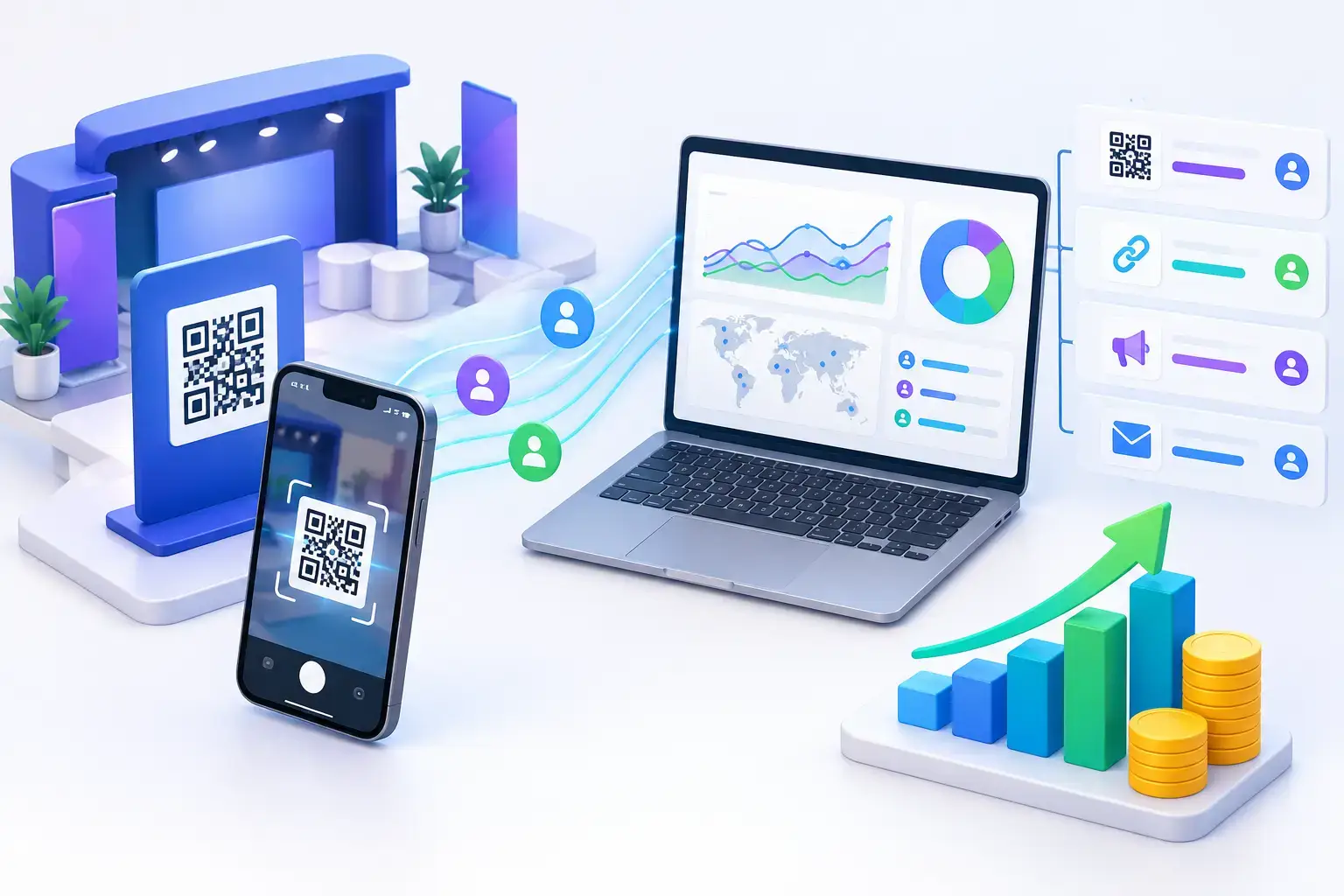
A QR code on a booth wall can generate a hundred scans and still tell you almost nothing. Did people scan after a product demo, from a speaker slide, or because a teammate handed them a flyer? Did those visitors book meetings, start trials, or disappear after one page? Event QR attribution turns that vague scan count into a usable answer.
For event marketers, creators, and growth teams, the goal is not to plaster one code everywhere. It is to give every meaningful placement its own trackable path, then connect behavior after the scan to outcomes that matter. Done well, QR codes become one of the cleanest ways to measure offline attention without guessing which part of the event actually worked.
What Event QR Attribution Actually Measures
Event QR attribution is the practice of assigning a unique, trackable QR code to an event channel, placement, audience segment, or call to action. When someone scans, the underlying link records the visit and passes campaign details into your analytics stack.
The QR code is only the entry point. Attribution happens when you can identify the source of the scan, the action taken next, and the value created later. A scan from a tabletop card may lead to a guide download. A scan from a live demo station may lead to a meeting request. A scan from a sponsored session slide may drive a trial signup three days later.
That distinction matters because raw scans can be misleading. A high-traffic location may produce plenty of curiosity but little intent. A smaller number of scans from a targeted invite-only dinner might produce the most qualified pipeline. The best event decisions come from comparing quality and outcomes, not simply volume.
Build Attribution Into the Event Before Doors Open
Attribution usually fails before the event begins. The common mistake is creating one QR code for the entire event, then trying to reconstruct the source after the fact. Once every scan lands on the same generic link, the useful context is gone.
Start by mapping the physical and digital touchpoints where someone could encounter your code. Your booth counter, pull-up banner, badges, printed handouts, presentation slides, event app listing, direct mail invite, sponsor email, and post-session thank-you screen are different sources. Treat them that way.
Create a separate short link and QR code for each placement that needs an answer. Use a naming system your team can understand months later. For example, `conf26-booth-demo`, `conf26-session-slides`, and `conf26-dinner-invite` are clearer than a stack of anonymous codes labeled QR-1, QR-2, and QR-3.
The destination should match the moment. A visitor standing in a crowded aisle may be willing to claim a giveaway, save a resource, or request a follow-up. They are less likely to complete a long form or read a dense product page. Keep the post-scan action focused, mobile-first, and fast.
Use campaign parameters without creating a mess
Campaign parameters help your web analytics platform classify the traffic that arrives after a scan. Keep the structure consistent across all codes. A practical approach is to use the event name as the campaign, the broad channel as the source, and the physical placement as the content value.
For example, a QR code on a booth display could carry campaign data that identifies the conference, labels QR as the source, and marks the booth display as the placement. A separate code on the presentation's closing slide uses the same campaign but a different placement value.
Consistency is more valuable than cleverness. If one team member writes “trade-show” and another writes “tradeshow,” your reporting splits what should be a single category. Establish the naming convention before anyone starts generating codes.
Design QR Campaigns Around Real Visitor Intent
Not every QR scan has the same meaning. A visitor who scans a code to enter a giveaway is not signaling the same intent as someone who scans to view API documentation or schedule a technical consultation. The call to action should make that difference obvious.
Use a direct instruction next to every code. “Book a 15-minute demo,” “Get the implementation checklist,” and “See the integration guide” set a clear expectation. “Scan me” does not. A specific call to action also gives your team a clearer basis for judging whether the placement delivered the intended result.
One code should generally serve one primary action. Combining a demo request, product brochure, newsletter signup, and social profile behind a single destination adds friction and weakens attribution. There are exceptions: a resource hub can work for a broad booth audience that needs multiple paths. But for high-intent moments, a focused page is easier to measure and more likely to convert.
The Metrics That Make Scans Useful
Scan count is a starting metric, not the finish line. To evaluate event QR performance, look at the full path from scan to business outcome.
At minimum, track scans, unique visitors, conversion rate, and the conversion type. Then compare those figures by code placement and event day. If your link platform provides device, location, time, and referrer data, use those signals to understand how and when visitors engaged.
A few ratios reveal more than a top-line scan total:
- Scan-to-landing-page conversion shows whether the destination meets the promise made beside the code.
- Scan-to-meeting rate shows which placements attract serious buyers rather than casual foot traffic.
- Scan-to-qualified-lead rate helps separate lead collection from actual demand.
- Follow-up conversion rate shows whether the event interaction created momentum after attendees went home.
Do not expect every event to produce a closed deal during the show. Sales cycles vary, especially for technical products and larger teams. The useful question is whether a QR source creates measurable progress toward the next meaningful stage, whether that is a meeting, trial, product conversation, or activated account.
Make the Data Reliable in a Crowded Event Environment
Physical placement affects both scan volume and data quality. Codes that are too small, poorly lit, glossy, or positioned behind a crowd can underperform for reasons unrelated to the offer. Test every code on multiple phones before printing, and leave enough quiet space around it for cameras to detect it quickly.
Dynamic QR codes are the safer operational choice because the destination can be updated without reprinting materials. That is useful when a landing page changes, a session time shifts, or a campaign needs to redirect after the event. It also protects your investment in physical assets that may be reused.
Use a branded short domain when possible. Attendees are being asked to scan a code from a company they may not know well. A recognizable domain and a clear destination build confidence. Security matters here too: every event link is a trust moment, especially in environments where people are exposed to dozens of QR codes. AWSYS helps teams shorten, brand, track, and safety-check those links before they are distributed.
Connect QR Data to Your Follow-Up Workflow
The event does not end when the booth comes down. Send scan and conversion data into the systems your team already uses for lead routing, lifecycle reporting, and follow-up. A person who requested a demo should not receive the same generic message as someone who downloaded an educational resource.
Tag leads with the event and QR source when possible. This lets sales and marketing see the context behind the interaction: which event, which placement, which offer, and which action the attendee took. That context makes follow-up more relevant and gives your team better evidence when deciding what to repeat.
If multiple people own the event, create a simple reporting view before the show. It should answer where scans came from, what visitors did next, which codes drove qualified actions, and where follow-up stalled. Avoid waiting until the final day to discover that a major placement points to the wrong page or has generated no measurable activity.
Review What Worked While the Event Is Still Fresh
Within a few days, compare each QR code against its intended job. A booth code that drives many scans but few form submissions may need a better offer or a shorter form. A session code that produces fewer scans but a strong meeting rate may deserve a larger role at the next event.
Also review the human side of the data. Ask booth staff which questions visitors repeated, when traffic peaked, and whether the call to action felt natural in conversation. Attribution tells you what happened. Team observations often explain why.
The strongest event QR programs get better one placement at a time. Give every code a purpose, protect the visitor's trust, and measure the action that follows the scan. That is how a printed square becomes evidence for the next smarter event decision. #AWSYSCO