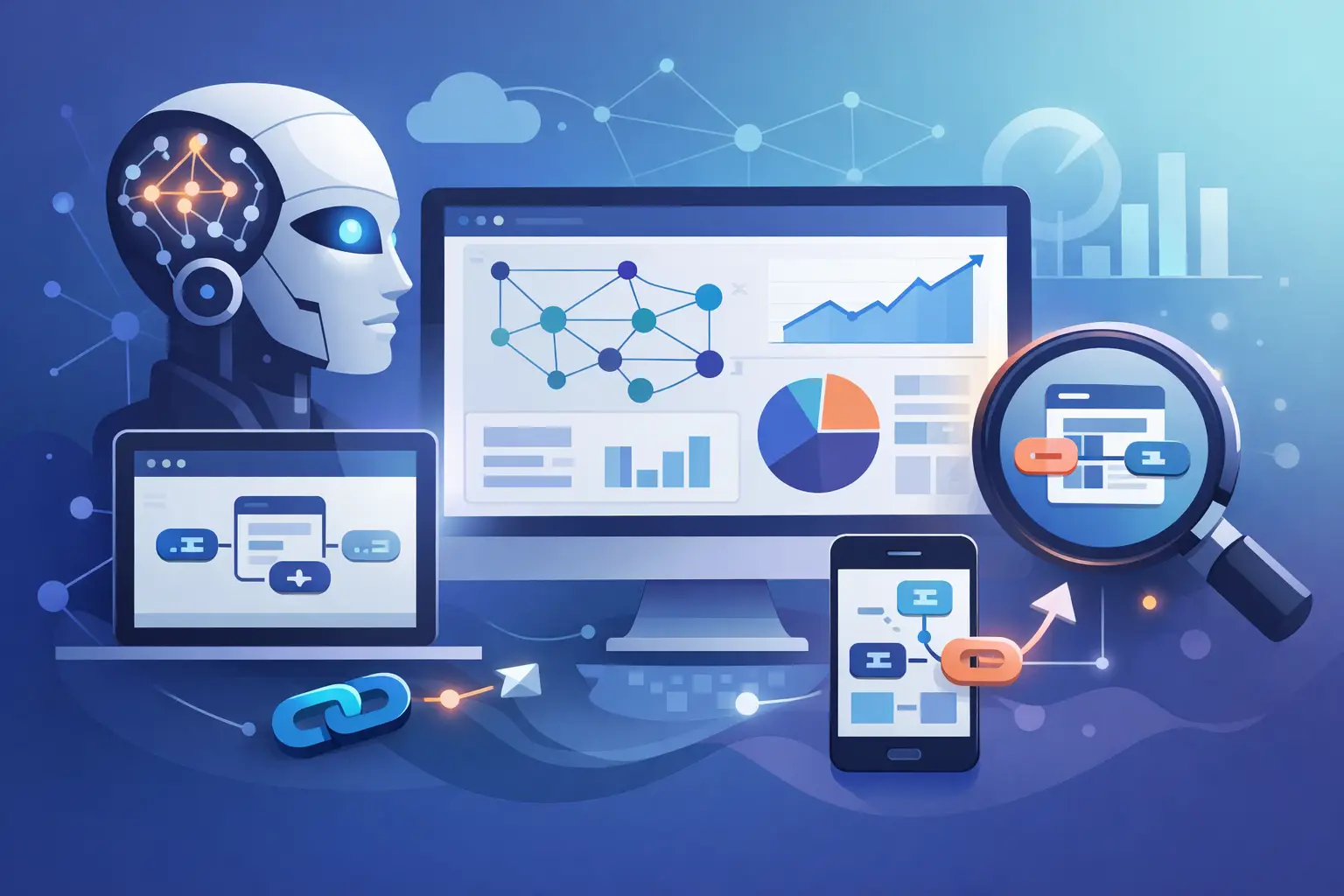
A click used to be a simple event: a person saw a link, tapped it, and landed somewhere. The future of AI link attribution breaks that assumption. AI assistants, autonomous agents, browser copilots, and automated research tools can now discover, evaluate, summarize, and sometimes act on links without producing the familiar trail of human browsing behavior.
For marketers, creators, developers, and growth teams, that changes a basic question: what does traffic actually represent? A referral may be a potential buyer reading an AI-generated answer, an agent checking product data for a workflow, or a bot scanning a destination before a user ever sees it. Treating all of those visits as identical creates noisy reports and bad decisions.
Why traditional attribution is losing context
Conventional link reporting was designed around channels people could recognize: email, social, paid ads, search, and direct traffic. Those categories still matter, but AI has introduced a new layer between content and the click.
A person might ask an assistant for the best project management template, receive a recommendation, and open a cited resource. Another user might never click at all, yet still see a brand, product, or offer inside an AI response. Meanwhile, an AI agent may visit several URLs to compare details, validate availability, or complete a task. The same campaign link can produce very different signals depending on who - or what - requested it.
That does not mean click analytics are obsolete. It means basic click totals are no longer enough. Teams need to separate activity that represents human attention from automated retrieval, security scans, preview generation, and agent-led workflows.
The cost of getting this wrong is real. Inflated traffic can make a weak channel look strong. Filtered traffic can hide early interest from AI-driven discovery. And an unexplained increase in direct traffic can leave a team guessing whether a campaign worked or an automated system simply touched the destination.
The future of AI link attribution needs better signals
Attribution will not be solved by one new referral label. AI systems do not behave consistently, and many user journeys will remain partly opaque. A practical approach uses multiple signals to build a clearer picture without pretending every interaction can be identified with certainty.
Agent traffic should be its own reporting layer
The first shift is operational: agent and automation activity should not be buried inside general clicks. It deserves a separate reporting layer with its own trends, sources, request patterns, destinations, and campaign tags.
This distinction helps teams answer useful questions. Is an AI system repeatedly discovering a product page? Are agents reaching documentation but not conversion pages? Did an automated workflow access a short link from a shared workspace, API process, or browser extension? These are different events from a person clicking a creator's link in a newsletter.
Clear categorization also protects performance reporting. A campaign manager should be able to view human engagement without discarding agent data. Both are valuable, but they measure different forms of attention.
Campaign architecture will matter more than raw volume
As AI systems become another distribution path, vague link organization becomes expensive. One generic short link copied across social posts, newsletters, partner placements, and product documentation cannot explain much. The answer is not more dashboards. It is better campaign design.
Create distinct branded links for meaningful placements, use consistent naming conventions, and preserve campaign metadata from the first share. A link for a creator partnership should not be the same link used in an onboarding email. A documentation link used by developers should be distinguishable from a promotional link used in paid distribution.
This gives attribution a foundation before AI traffic enters the picture. When source data is clean, unusual patterns are easier to investigate. When every channel shares the same destination and short code, no analytics platform can reconstruct the missing context later.
Destination-level behavior will carry more weight
The next useful signal happens after the click. A single page request may be a preview bot, a security scanner, an agent extracting information, or a real visitor. Downstream behavior can help clarify the difference.
Human visitors tend to create richer sequences: additional page views, form starts, account creation, purchases, video plays, or repeated visits. Agent activity may appear as fast, structured retrieval across a small set of pages. Neither pattern is universal, so teams should avoid rigid rules. The goal is to compare behaviors and identify confidence levels, not to force every request into a perfect box.
For growth teams, this means link analytics and destination analytics need to work together. The short link identifies how traffic entered. The product, landing page, or application shows what happened next.
Trust becomes part of attribution quality
AI-driven link activity raises a second issue: not every automated visit is benign. Links can be checked by security tools, crawled by unknown systems, or used as a handoff point in automated workflows. If a destination is risky, attribution data is the least of the problem.
Trust scoring at link creation changes the equation. Instead of treating security as a cleanup task after distribution, teams can evaluate destinations before a campaign goes live. Automatic blocking of malicious destinations further reduces the chance that a branded link becomes a path to harm.
This matters for brand performance as much as safety. A suspicious redirect can damage audience confidence, contaminate campaign data, and create support work that should never have existed. Clean attribution starts with links people and systems can trust.
What teams should do now
The future of AI link attribution will be uneven. Some AI platforms will provide recognizable signals, others will obscure them, and user privacy controls will continue to limit certainty. That is not a reason to wait. It is a reason to build a measurement system that handles ambiguity better.
Start by auditing how links are currently created and shared. If campaign names, destinations, owners, and channels are inconsistent, fix that first. Then establish reporting views for human traffic, known automation, suspicious activity, and unclassified requests. Unclassified does not mean useless. It is a category that deserves monitoring rather than a forced guess.
Next, look for patterns instead of obsessing over one-off clicks. A single agent request may mean nothing. Repeated agent activity around a new product launch, a documentation update, or a high-intent landing page can reveal where AI systems are finding and evaluating your content.
Finally, make link management part of the growth stack, not an afterthought. Branded domains, routing controls, safety checks, APIs, and detailed analytics become more valuable when distribution is fragmented across people, platforms, devices, and agents. AWSYS brings those controls together with AgentLink analytics, giving teams a clearer way to measure AI-oriented traffic without paying enterprise-level prices for standard link operations.
The strategic shift: optimize for discovery, not just clicks
The most useful mindset change is to stop treating every campaign as a straight line from impression to click to conversion. AI is turning discovery into a network of recommendations, summaries, retrieval steps, and delegated actions. Some of that activity will lead to immediate visits. Some will influence a later decision that analytics cannot fully connect.
That makes high-quality content, clear destinations, trusted branded links, and disciplined campaign structure more important. If an AI system encounters your link, it needs enough context to understand where it leads and enough trust to use it safely. If a person follows that recommendation, the journey should be easy to measure and easy to continue across devices.
The teams that win will not claim perfect attribution. They will build cleaner signals, separate what they know from what they infer, and move faster because their links are organized, secure, and ready for the next source of traffic. Start shortening safely, track with intent, and let every new signal earn its place in the decision-making process.