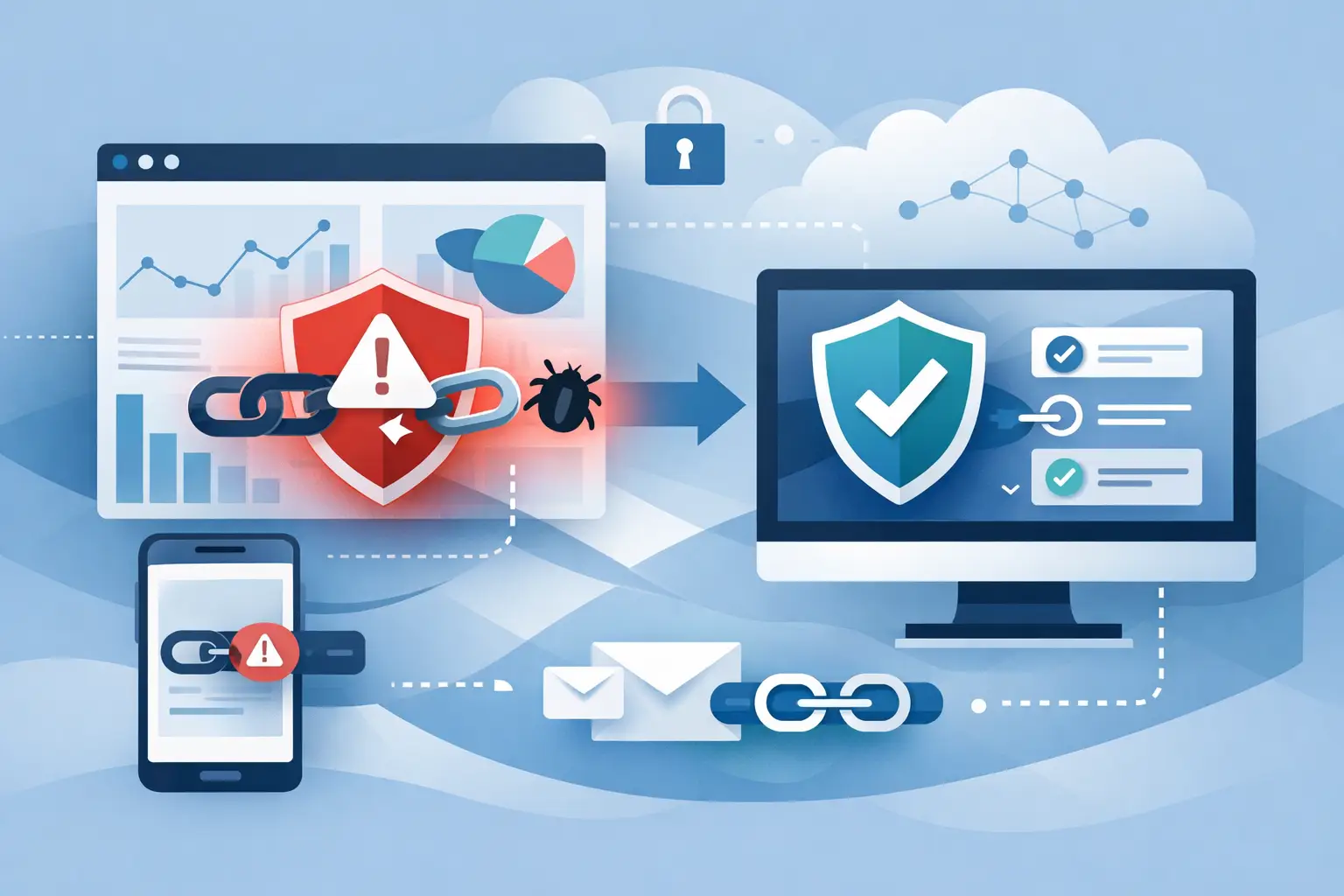
One bad link can waste a campaign, damage trust, and send your audience somewhere you would never endorse. That is why teams now need to block malicious URLs before sharing them, not after a customer reports a problem. If you manage branded links, creator promos, product updates, QR campaigns, or API-driven workflows, link safety has to happen at the moment of creation.
Most teams still treat link safety as a cleanup task. They shorten first, publish fast, and only investigate when click quality drops or support tickets show up. That approach is cheap right up until it is expensive. A malicious destination can trigger browser warnings, hurt conversion rates, pollute campaign data, and make people hesitate before clicking anything from your brand again.
Why block malicious URLs before sharing matters
Short links move fast. They get copied into social posts, paid campaigns, email sequences, SMS, partner pages, QR codes, and internal docs in minutes. Once they spread, fixing the damage is harder than preventing it.
The bigger issue is that malicious URLs are not always obvious. Some are direct phishing pages. Others hide behind redirects, typo domains, compromised pages, or bait-and-switch destination changes. A link may look harmless in a spreadsheet or chat thread and still lead somewhere risky after multiple hops.
For marketers, that means lower trust and dirtier attribution. For creators, it means followers stop clicking. For developers, it means unsafe URLs can enter automated workflows before anyone manually reviews them. For startup teams, it means one weak spot in the sharing process can hit growth, support, and reputation all at once.
What a good link safety process actually looks like
If you want to block malicious URLs before sharing at scale, the answer is not more manual spot checks. It is a tighter workflow built around validation, trust scoring, redirect inspection, and access control.
The first step is checking the destination before the short link is ever created. That sounds obvious, but many tools only react after a link is live. A stronger setup evaluates the original URL during creation, looks for known threat signals, and stops unsafe destinations from moving forward.
The second step is understanding redirect behavior. A clean-looking URL can still bounce through suspicious intermediaries. If your tool only scans the first visible URL and ignores the path after redirects, you are missing where the real risk often lives.
The third step is keeping the result visible to the person creating the link. A binary safe or unsafe flag helps, but transparent trust scoring is better. It gives teams context. Maybe a destination is not confirmed malicious, but it still carries enough warning signs that it should not be shared in a paid campaign or customer email.
How to block malicious URLs before sharing in real workflows
The right process depends on how your team publishes links. A solo creator may need a simple checkpoint before posting. A growth team may need link-level rules across channels. A developer may need protection built into the API layer.
For marketing and campaign teams
Marketing teams usually move the fastest, which is why they need the least friction. If your team launches links across ads, email, organic social, and QR placements, every destination should be checked before shortening. That includes final landing pages, affiliate URLs, UTM-tagged links, and any destination provided by a partner.
A practical rule is simple: if a link is worth tracking, it is worth scanning first. That protects more than users. It protects campaign data. Malicious or compromised destinations can create fake engagement, spike bounce rates, and make normal performance analysis harder than it should be.
For creators and brand accounts
Creators work in high-trust environments. Audiences click because they trust the person sharing the link. That trust is fragile. One bad destination, even if it came from a sponsor, tool, or collaborator, can do lasting damage.
For creators, the best defense is a link workflow that checks destination quality automatically and blocks risky URLs before they ever become shareable short links or QR codes. It removes guesswork and keeps speed high when publishing across multiple platforms.
For developers and product teams
If links are created through forms, apps, integrations, or APIs, manual review will not scale. Safety checks need to happen inside the creation flow itself. That means validating input URLs, inspecting redirects, rejecting risky destinations, and logging why a link was blocked.
The trade-off here is strictness. If you make your filtering too aggressive, you may block legitimate edge cases such as new domains, private environments, or region-specific redirects. If you make it too loose, unsafe links slip through. The right system lets you tune policy without removing protection.
Signals that help block malicious URLs before sharing
No single signal catches everything, and that is exactly why shallow scanning fails. Strong detection comes from stacking multiple checks together.
Domain reputation is one piece. If a destination sits on a known bad or suspicious domain, that is an easy stop. But reputation alone is not enough because attackers rotate domains quickly and sometimes abuse otherwise legitimate sites.
Redirect depth matters too. A long redirect chain often signals masking behavior, though not every multi-step redirect is malicious. Campaign tools, localization, and app deep linking can create legitimate redirects. What matters is whether the chain ends in a trustworthy destination and whether any hop introduces risk.
Pattern analysis also helps. Suspicious URL structures, deceptive subdomains, unusual query strings, and lookalike brand names can all signal trouble. Again, context matters. Some long URLs are normal. Some ugly links are harmless. The goal is to combine pattern detection with reputation and destination verification, not to overreact to one weird-looking parameter.
Why blocking beats post-click cleanup
A lot of teams still rely on takedowns, support escalations, or after-the-fact reporting. That is reactive security. It helps, but it does not solve the main problem, which is that someone already clicked.
Pre-share blocking is better because it protects trust before exposure. It also saves time. Instead of chasing down links already pasted into newsletters, creator bios, sales decks, and partner posts, you stop bad destinations at the source.
There is also a cost angle. Unsafe links can waste paid traffic, trigger platform review issues, and send teams into hours of cleanup work. Blocking early is not just safer. It is more efficient.
What to look for in a safer link management platform
If link safety matters to your workflow, your shortener should do more than compress characters and count clicks. It should evaluate the destination when the link is created, surface trust signals clearly, and prevent unsafe links from being shared.
You also want analytics that stay useful after safety controls are in place. Blocking malicious destinations should not mean losing visibility into what users, campaigns, devices, or channels are doing. The best platforms combine safety with branded links, routing control, and detailed reporting so security does not slow growth.
This is where modern platforms such as AWSYS stand out. Instead of treating safety as a bolt-on, they bring trust scoring and malicious destination blocking into the link creation flow itself. That gives teams a faster way to shorten, track, customize, and secure links without paying extra for basic control.
A smarter standard for sharing links
The old model was simple: create the short link, send it out, and hope nothing goes wrong. That is no longer good enough for serious teams. If links drive traffic, revenue, attribution, and brand trust, they need the same level of scrutiny as any other customer-facing asset.
To block malicious URLs before sharing, build safety into the first click of your own workflow. Check the destination early, inspect redirects, use visible trust signals, and stop risky links before they reach your audience. Fast sharing still matters, but safe sharing wins twice - once in protection, and again in performance.
Every click carries your name with it. Treat each link like it does.