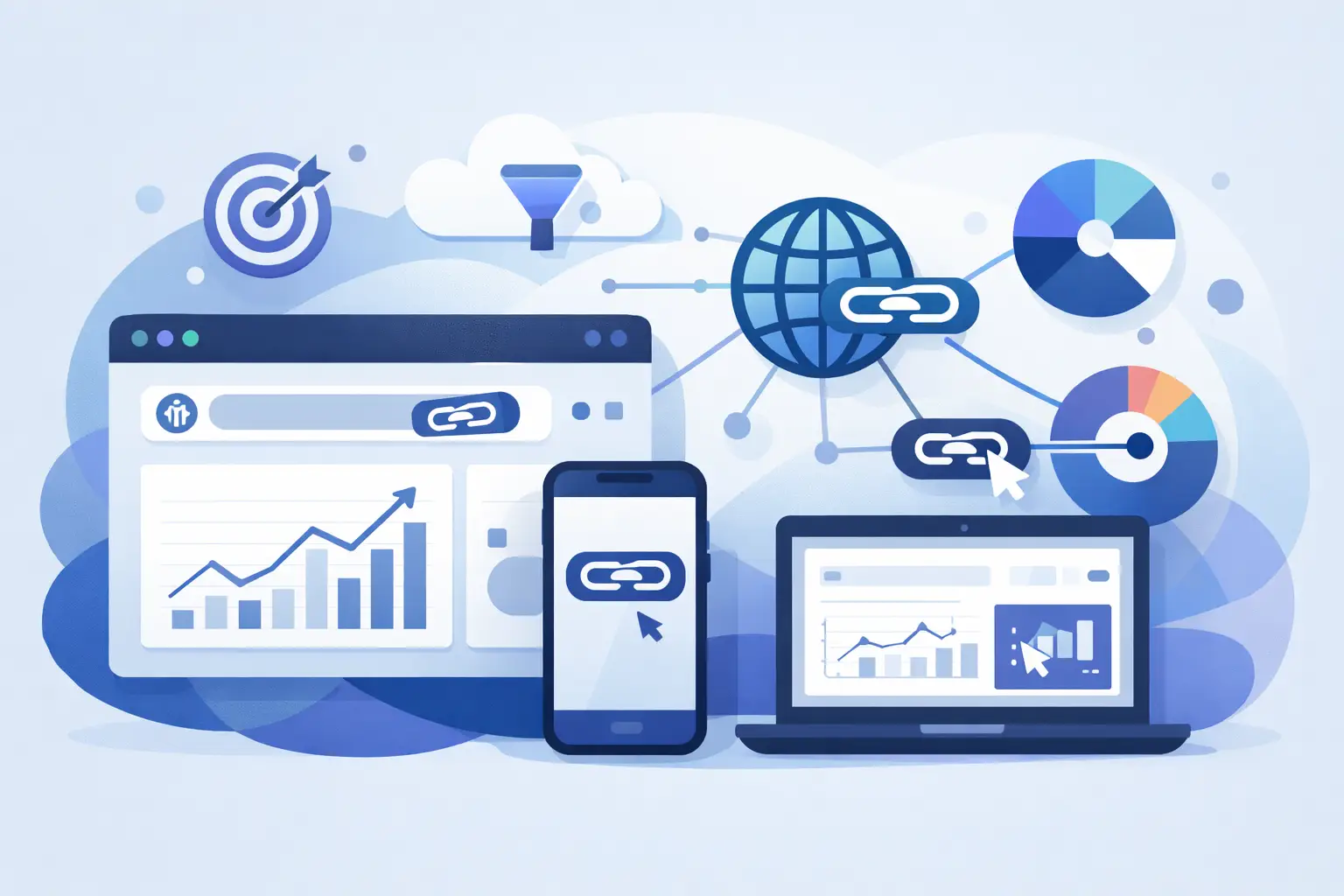
A random short URL can cost you the click before your page ever has a chance to load. People scan links fast. If the domain looks unfamiliar, generic, or sloppy, hesitation kicks in. That is why custom domain short links are not a cosmetic upgrade. They affect trust, brand recall, campaign clarity, and the quality of the traffic data you collect.
For marketers, creators, developers, and lean teams, this matters because links sit everywhere - ads, bios, SMS, QR codes, emails, product flows, support docs, affiliate campaigns, and social posts. A short link is often the first branded touchpoint in the journey. If that touchpoint feels disposable, the rest of the campaign starts from a weaker position.
What custom domain short links actually do
At the simplest level, custom domain short links replace a generic shortening domain with one you control. Instead of sending traffic through a shared domain that thousands of other users may also rely on, you send people through a branded domain tied to your business, product, publication, or campaign.
That small change does more than clean up the URL. It gives you ownership over how your links look in public, how your campaigns are organized, and how your audience interprets the click before they take it. A custom short domain can signal legitimacy in a crowded feed, make offline materials easier to remember, and reduce the friction that comes from asking users to trust an unfamiliar destination.
There is also a data benefit. When link infrastructure is treated as part of your brand stack rather than a throwaway utility, reporting tends to get cleaner. Teams are more likely to standardize naming, routing, and campaign structure when the links feel like a real business asset.
Why branded short links outperform generic ones
The biggest advantage is trust. People do not analyze every link with full attention, but they do make snap judgments. A branded domain looks intentional. It tells the user that the sender invested enough to put their own name on the link.
That trust boost matters even more in channels where scams, spam, and impersonation are common. In text messages, direct messages, social bios, and QR code experiences, the visible domain can be the only clue a person uses to decide whether to proceed. If the domain matches your brand, campaign, or product line, the click feels lower risk.
Brand recall is the second advantage. Short links often get copied, screenshotted, shared verbally, or reused in places you did not originally plan for. A custom domain keeps your brand attached to the URL itself. Generic shorteners tend to keep the platform brand in front while your own brand fades into the background.
The third advantage is operational. Branded domains make it easier to segment campaigns. Many teams use one domain for general marketing, another for product onboarding, and another for region or channel-specific initiatives. That structure can help with reporting, governance, and internal clarity. It also helps when multiple teams need to manage links without stepping on each other.
Custom domain short links and click performance
Not every branded link will outperform every generic one. Context matters. Audience familiarity, channel norms, message quality, and landing page relevance all shape results. Still, in many real campaigns, branded links improve click confidence because they reduce uncertainty.
This is especially true when the slug is readable. A custom domain paired with a clear path such as yourbrand.co/demo or go.yourbrand.com/spring-sale gives users useful context before they click. They can infer where the link leads and why it is relevant. That makes the link feel more like information and less like a black box.
There is a trade-off, though. If you over-customize every slug, governance can get messy. Teams may create inconsistent naming conventions, duplicate destination paths, or hard-to-manage redirect libraries. The best setup balances readability with structure. Make links understandable to users, but standardized enough for reporting and maintenance.
The analytics side is where the value compounds
A short link should not only redirect. It should tell you what happened after distribution. That means clicks by source, device, geography, time, and campaign context. With custom domain short links, those insights are easier to connect to your actual brand ecosystem because the domain itself becomes part of your attribution logic.
This is where many teams outgrow basic shorteners. They start with a simple need - make the URL shorter - then realize they also need routing rules, QR code tracking, mobile behavior controls, API access, fraud filtering, and campaign-level analytics that can be acted on quickly.
For example, a creator may want separate branded links for newsletter placements, YouTube descriptions, and podcast mentions. A startup team may want one domain for lifecycle messaging and another for outbound acquisition. A developer may need short links created programmatically for product notifications or app events. Once you treat the short link as a measurable asset, the domain choice starts to matter much more.
Security is not optional anymore
One uncomfortable truth about shortened URLs is that they can hide bad destinations as easily as they hide long ones. That is why trust cannot stop at branding alone. A custom domain helps users feel safer, but the platform behind it still needs to evaluate destination quality and block obvious abuse.
If your shortener allows harmful destinations to pass through unchecked, your branded domain can become a liability. Users may blame your brand, not the tool. That is why advanced safety scanning and trust scoring are worth paying attention to. The strongest setup is one where links look branded, route cleanly, and are assessed for risk at creation time rather than after damage is done.
For businesses distributing links at scale, this matters internally too. Marketing teams, partnerships managers, and support agents all create links under time pressure. Guardrails reduce the odds of accidental mistakes and malicious misuse without slowing the workflow to a crawl.
How to choose a short domain that will hold up
The best custom short domain is usually short, pronounceable, easy to type, and obviously connected to your brand. That does not always mean using your full company name. In some cases, a concise brand abbreviation or campaign-oriented domain works better, especially for mobile-heavy traffic and offline use.
Avoid domains that are clever but confusing. If users cannot recognize, spell, or remember the domain after seeing it once, the branding benefit shrinks fast. The same goes for odd punctuation patterns, awkward abbreviations, or domain names that look too close to something unrelated.
You should also think beyond aesthetics. Ask how the domain will be used across SMS, email, social, QR codes, ads, and app flows. Ask who will manage it. Ask whether the naming system will still make sense after you have created hundreds or thousands of links. A domain that looks great on day one but creates reporting chaos six months later is not a smart choice.
Where custom domain short links fit best
They are especially useful in channels where attention is thin and trust is fragile. Social media is an obvious one, but it is not the only one. SMS campaigns, printed materials, event signage, influencer partnerships, podcast callouts, affiliate workflows, customer support macros, and product onboarding all benefit from links that are both compact and clearly branded.
They also work well for teams building automation. If your business generates links through APIs, webhooks, browser extensions, or internal tools, using a custom domain keeps the experience consistent even when link creation is distributed across systems. That consistency becomes more valuable as volume grows.
For AI-related workflows, link visibility is becoming its own category. As traffic sources diversify, knowing whether clicks came from humans, assistants, agents, or automated systems can shape campaign analysis and routing decisions. In that environment, a shortener that combines branded domains with deeper attribution is no longer a nice extra. It is part of the measurement stack.
The real question is not whether you need them
The real question is how much value you want your links to produce. If all you need is a shorter string of characters, almost any tool can do the job. But if you care about brand consistency, cleaner analytics, safer distribution, better campaign control, and infrastructure that can scale with your workflows, custom domain short links are the smarter choice.
That is the gap many teams notice after they have outgrown bare-bones link tools. They want branded control without bloated complexity, stronger analytics without enterprise-only friction, and safer link creation without slowing down execution. Platforms like AWSYS are built for exactly that middle ground - where links are not just shorter, but more measurable, more secure, and more useful to the business.
A short link looks small on the screen, but it carries a lot of responsibility. Put your name on it, measure it well, and make every click feel earned.